Why do people with locked social media profiles send friend requests to strangers? Explore the toxic double standard of online anonymity and why platforms need mandatory photo verification.
In the digital age, social media has transformed from a casual networking tool into a massive virtual town square. We share our milestones, discuss current events, and exchange opinions. But a frustrating, hypocritical trend is taking over platforms like Facebook, Instagram, and X (formerly Twitter): the “Locked Profile Lurker.”
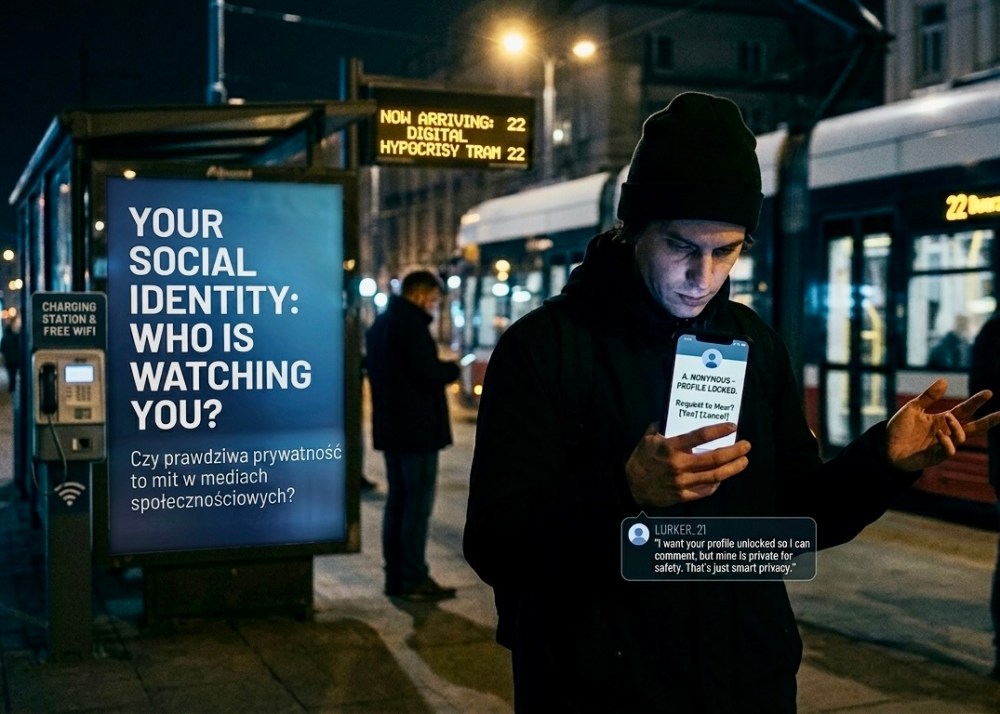
We’ve all seen them. You get a friend or follow request from an account with a generic avatar or a locked profile. Out of curiosity, you accept, or perhaps they comment directly on a public post of yours. They voice strong opinions, offer unsolicited advice, or critique your life. Yet, when you click on their profile to see who you are engaging with, you are met with a digital brick wall: “This account is private.”
When questioned, their defense is always the same: “I have a right to my privacy.”
But does this defense hold up, or is it just a shield for unaccountable behavior? Let’s dive into the psychology of the social media double standard and why it’s time for platforms to enforce real accountability.
The Social Media Double Standard: Voyeurism vs. Privacy
There is a fundamental difference between wanting privacy and practicing digital voyeurism. True privacy means keeping to yourself. However, sending friend requests to strangers, digging through their photo albums, and dropping commentary on their feeds is active participation in someone else’s life.
The golden rule of digital etiquette: If you want to look into and comment on other people’s lives, you must be willing to show who you are.
Social media is built on mutual respect. When you interact with someone online, it is a two-way conversation. Hiding your identity behind a locked profile while poking into the public or semi-private lives of strangers isn’t protecting your privacy—it’s maintaining an unfair advantage. If you truly want a completely private life, the solution is simple: stay off social media entirely. You cannot demand total transparency from others while offering absolute anonymity in return.
How Anonymity Fuels Cyberbullying and Spam
The biggest issue with the “locked and anonymous” profile isn’t just that it’s annoying—it’s dangerous. Total anonymity removes social consequences. When people believe their actions cannot be linked back to their real-world identities, their empathy drops, and their aggression spikes.
Most online wrongs—including cyberbullying, trolling, spamming, and targeted harassment—originate from accounts that are:
- Locked or completely private.
- Using fake profile pictures (stock photos, cartoons, or scenery).
- Operating under pseudonyms or disguised identities.
By allowing users to fully camouflage themselves while interacting broadly across their platforms, tech giants are inadvertently creating a safe haven for toxic behavior.
The Solution: Mandatory Profile Verification
Ironically, social media companies already have the tools to fix this. Over the last few years, major platforms have rolled out paid subscription tiers (like Meta Verified or X Premium). To get that coveted blue checkmark, users are required to submit government-issued IDs and upload a verified profile photo that matches their real identity.
If tech giants can implement this rigorous verification process to make a profit, they can certainly use it to protect the general public.
Current State: Proposed Safe State:
[Anonymous/Locked Account] [Mandatory Base Verification]
│ │
▼ ▼
Unchecked Trolling & Spam Accountable, Civil Discourse
Why a Verified Profile Photo Should Be Mandatory
Social media platforms have grown into multi-billion-dollar conglomerates that heavily influence modern society. With that power comes a corporate responsibility to care for the safety of their communities.
To curb online harassment, social media companies should introduce a basic, mandatory rule for any active account: A verified profile photograph.
- Drastically Reduce Spammers: Automated bots and click-farms rely on mass-producing fake accounts. Forcing a real-time facial verification check would instantly dismantle these networks.
- Eliminate the “Anonymity Shield” for Bullies: If a user knows their real face is tied to their account—even if their personal data remains hidden from public search engines—they are far less likely to leave abusive or defamatory comments.
- Keep Privacy for Content, Not Identity: Users can still choose to keep their posts private to friends only. However, their identity as a platform user must be verified and real.
Conclusion: Privacy is Not a Banner for Crime
Privacy is a fundamental human right, but it should never be used as a shield to perpetrate online abuse, spam, or harassment. If social media companies want to prove that they care about the health of our society—and not just their bottom lines—they must stop favoring bad actors under the guise of “user privacy.”
True digital reform starts with accountability. If you want to speak up in the public square, you need to show your face. It’s time for social media platforms to make verification a standard, safety-first feature for everyone.
“Timeless Elegance, Delivered Worldwide”
Discover our exclusive online collections of the finest
Swiss Made Watches for Men and Women.
Precision, heritage, and craftsmanship all at Your fingertips.
Shop now, and experience luxury, that transcends time,
delivered to Your door, anywhere in the World.
Swiss Watch Shop
www.swisswatchshop.co
#SocialMediaEtiquette #DigitalPrivacy #SocialMediaReform #TechAccountability #DoubleStandard #OnlineHarassment #CyberbullyingAwareness #MetaVerified #ProfileVerification #InternetSafety #StopTrolls #DigitalCitizenship #Anonymity #SocialMediaSafety #CyberSafety #OnlineEthics #TechResponsibility
#DigitalEthics #CyberbullyingPrevention #SocialMediaReform2026 #OnlineAccountability #StopOnlineHarassment #ThinkBeforeYouType #FakeProfiles #VerifiedAccounts #SafeInternet #CorporateResponsibility #OnlineTrolls #InternetEtiquette #TechReform #DigitalFootprint #EndCyberbullying #NoMoreAnonymity #SocialMediaSafety #CommunityStandards #DigitalUpstander #ResponsibleSocialMedia
#Content #ContentCreator #ContentCreators #ContentWriter #CopyWriter #Article #GoodReads #Lifestyle #Blogger #DigitalContent #DigitalMarketing #ContentMarketing

